
The future of glaucoma care is being shaped today.
Earlier this year, the World Glaucoma Association (WGA) launched Shaping the Vision for the Future (VF), a major strategic initiative designed to define priorities and pathways for the future of glaucoma care worldwide. Initiated by WGA President Fotis Topouzis and co-chaired by Fotis Topouzis and Robert N. Weinreb, the initiative brings together an international community of experts, societies and patient representatives to develop a shared vision for tackling one of the world’s leading causes of irreversible blindness.
At its core, Shaping the VF recognises that glaucoma care is entering a period of profound transformation. Demographic changes, the growing global burden of disease, advances in artificial intelligence, emerging technologies, evolving treatment approaches and scientific discoveries are all reshaping how care may be delivered in the years ahead. The initiative seeks not only to anticipate these changes, but also to provide practical guidance on how they can be translated into meaningful improvements for patients around the world.
A patient-centred vision
A defining feature of the project is its commitment to a patient-centred approach.
Rather than examining innovation in isolation, the initiative uses the glaucoma patient journey as a unifying framework, considering every stage of care—from screening and early detection through assessment and monitoring to long-term management and treatment. This approach ensures that future recommendations are grounded not only in scientific progress but also in the real experiences and needs of people living with glaucoma.
Recognising the importance of incorporating diverse perspectives, WGA has engaged both clinician representatives from national and regional glaucoma societies and patient representatives from glaucoma patient organisations worldwide through a structured consultation and modified Delphi process.
Launching the collaboration at EGS
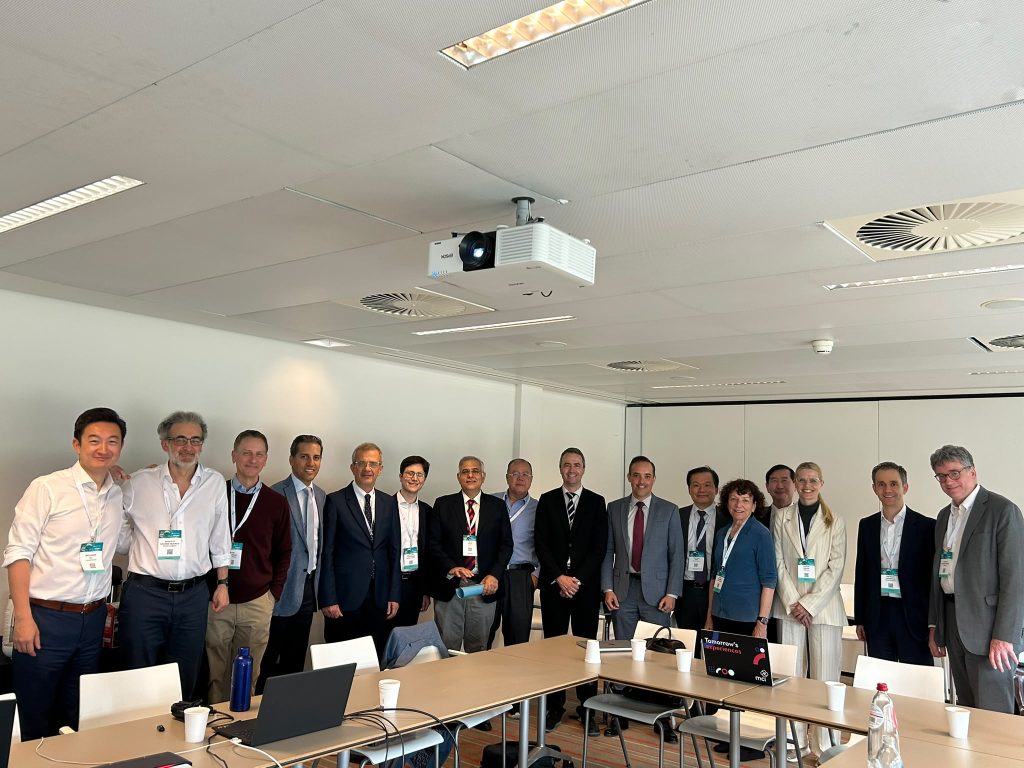
A significant milestone for the project was reached on Sunday, May 31, 2026, when WGA convened the first in-person and hybrid meeting of the initiative alongside the European Glaucoma Society Congress (EGS) in Brussels. The meeting brought together working group leaders, international glaucoma experts and virtual participants from around the world to formally launch the collaborative phase of the project.
Co-chairs Fotis Topouzis and Robert Weinreb opened the meeting by outlining the project’s overarching ambition: to better understand, articulate and help shape the future of glaucoma care globally. Discussions focused on the project’s structure, timelines, survey methodology and the priorities that will inform the work ahead.
Participants also reviewed the project’s global remit, including the need to account for variation in healthcare systems, access to care, resource availability and patient needs across different regions of the world. Particular attention was given to understanding how technological and scientific advances can be implemented in a way that delivers tangible value to patients and healthcare systems alike.
Three sections, one shared objective
The work of the initiative is organized around three sections and respective dedicated international working groups, each corresponding to a key stage of the glaucoma patient journey.
Screening and Detection
This section is examining future opportunities to improve identification of individuals at risk of glaucoma, including public awareness initiatives, community-based screening programs, AI-assisted detection tools, risk prediction models, telemedicine solutions and improved access to care in underserved populations.
Assessment
The assessment section is exploring how diagnosis, staging, prognosis and monitoring can evolve through improved use of multimodal imaging, AI-supported interpretation, home monitoring, predictive analytics, biomarkers and personalized risk assessment.
Management and Treatment
This section is focused on current and future therapeutic strategies, including optimization of medical therapy, laser and surgical interventions, novel drug delivery systems, neuroprotection, disease-modifying therapies, personalized treatment approaches and innovations that may ultimately restore visual function.
The sections are led by internationally recognized glaucoma experts and will ultimately contribute to a consolidated WGA recommendations document intended for ophthalmologists, eye care professionals, healthcare providers, industry stakeholders and policymakers.
Identifying the world’s glaucoma priorities
A major component of the project is a global modified Delphi process designed to identify and prioritize the most important challenges and opportunities facing glaucoma care. National and regional glaucoma societies, together with patient representatives, have been invited to contribute their perspectives through a series of structured surveys.
Initial survey findings have already highlighted a number of recurring themes across the patient journey, including earlier detection, improved access and equity, integration of artificial intelligence, enhanced monitoring strategies, personalised care pathways, better patient education and the development of future therapies capable of modifying or even reversing disease progression.
The discussions held during the first in-person and hybrid meeting helped set the direction for the next phase of work, during which each section will refine priorities, develop topic-specific workstreams and begin constructing recommendations that can help guide the future evolution of glaucoma care.
Looking ahead
Ultimately, Shaping the Vision for the Future aims to create more than a consensus document. It seeks to establish a globally aligned vision that can support earlier detection, more precise diagnosis, more effective treatments and better outcomes for patients living with glaucoma.
By bringing together clinicians, researchers, healthcare providers, industry partners and patients, the WGA is creating a unique platform for collaboration at a time when the future of glaucoma care is being shaped by rapid innovation and increasing global need. Together, these efforts will help ensure that the next generation of glaucoma care remains evidence-based, patient-focused and accessible to those who need it most.
Learn more
The EGS meeting marked an important first step in this ambitious global initiative. To learn more about the discussions, participants and next steps, hear directly from WGA President, and Shaping the VF Co-Chair, Fotis Topouzis:
The “Shaping the Vision for the Future” is a pivotal WGA initiative which emerged as a need to Guide the Global Glaucoma Community towards the future and the anticipated changes in glaucoma care. The idea is that changes in glaucoma care in the near future as related to demographic changes, advances in artificial intelligence, emerging technologies and scientific developments will make a great impact in glaucoma care.
The glaucoma community including all stakeholders should prepare and adopt changes in a way to improve glaucoma care and glaucoma patient journey.
This initiative has been developed during the last several months. As of today the WGA was able to involve more than 80 representatives of Glaucoma Societies to provide with input on priorities to be addressed through a survey and Delphi process. The survey currently on second round is expected to complete very soon while another survey seeking input from patients representatives of patient organizations is currently ongoing. The three sections participants internationally recognized experts in the field will organize the work to address priorities as emerged from the surveys and provide with respective documents by early March 2027. A discussion on the documents will be organized in Kyoto WGC-2027 to reach the final document as the Global Guidance for the Future of Glaucoma Care.
