
It was a great pleasure and an honor to participate in WOC 2026 in Prague. The congress provided an exceptional opportunity to exchange scientific knowledge, reconnect with colleagues, and strengthen collaborations with ophthalmologists and researchers from around the world.
Overall, the congress was marked by highly relevant and contemporary topics, reflecting the rapid evolution of glaucoma diagnosis and management. The scientific program covered a broad spectrum of areas, including artificial intelligence and digital innovation, advanced imaging and progression assessment, neuroprotection, 24-hour intraocular pressure monitoring, childhood glaucoma, lifestyle-related risk factors, and new surgical approaches. The participation of experts from many different countries and regions brought a truly global perspective to the discussions, allowing delegates to compare clinical realities, research priorities, and strategies for improving glaucoma care across diverse healthcare settings.
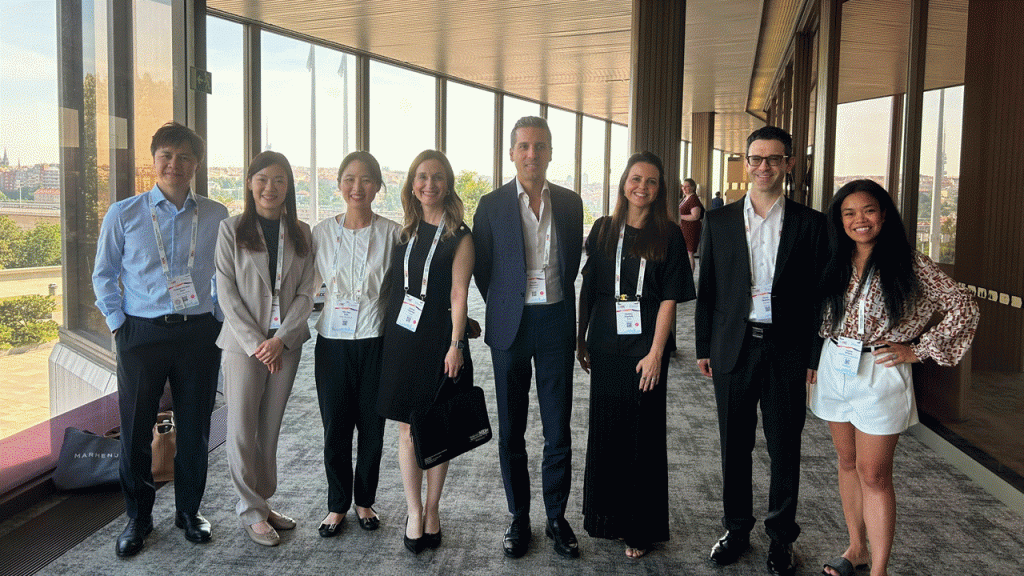
One of the major highlights was the symposium “Glaucoma Therapy: Drops, Lasers and Beyond,” chaired by WGA President Professor Fotis Topouzis on Saturday, June 27. The session attracted remarkable interest from delegates. Attendance exceeded the capacity of the room, and a second overflow screen had to be arranged so that additional participants could follow the presentations. This enthusiastic response reflected the clinical relevance of the topic and the growing interest in the expanding range of medical, laser, and other therapeutic options available for glaucoma management.
Another interesting session was the WGA session “Unraveling the Mysteries of Glaucoma: Challenging Cases,” chaired by Kaweh Mansouri and Min Hee Suh. This highly engaging case-based session addressed several challenging clinical scenarios. Farouk Garba discussed the use of portable devices for glaucoma detection in low- and middle-income countries; Sunee Chansangpetch presented an unusual case of bilateral angle closure caused by a novel mechanism; Poemen Chan addressed the management of pre-glaucoma; and Zeynep Ozturker explored hidden pressure-related factors that may be overlooked in clinical practice. I also contributed with the presentation “An Interesting Case of Advanced Glaucoma with High Myopia.”
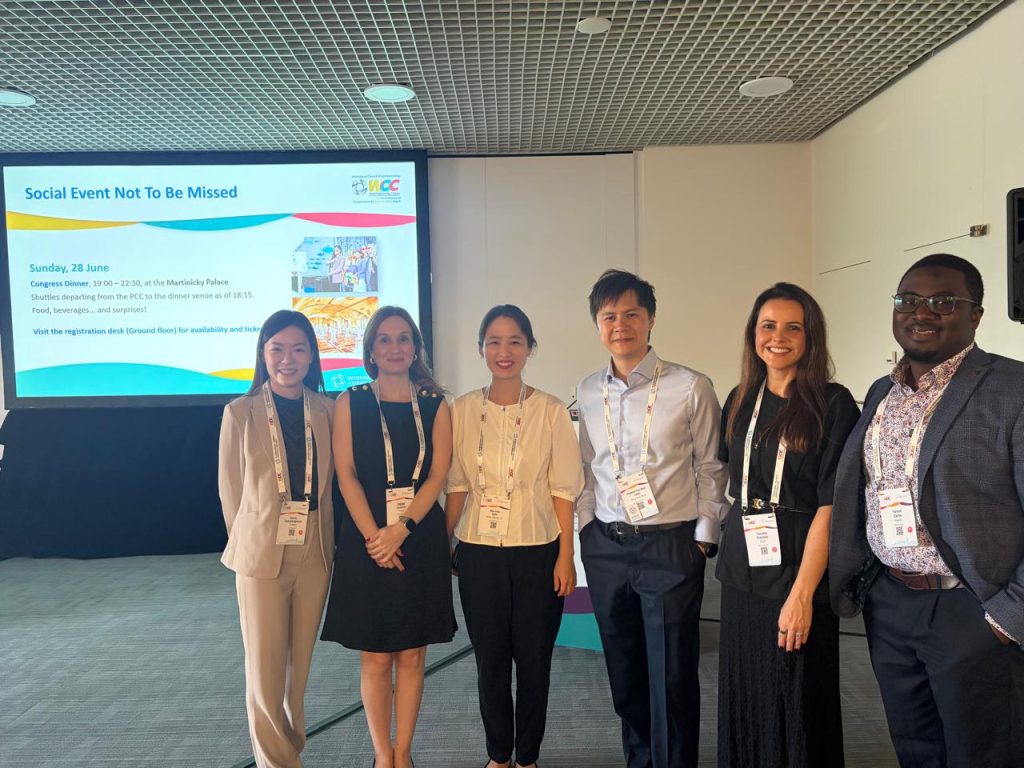
I was also honored to co-chair the Brazilian Glaucoma Society Session with Roberto M. Vessani, the current President of the Brazilian Glaucoma Society. The session provided an overview of glaucoma care in Brazil, including epidemiological evidence and data gaps, the economic burden of the disease, and current surgical practices. During the session, I presented “Improving Reading Performance in Glaucoma Patients: Evaluation Strategies and Clinical Interventions,” focusing on reading performance as a meaningful patient-centered outcome and on strategies to assess and improve reading in patients with glaucoma.
Another particularly forward-looking session was “Hot Topics and Future Horizons in Glaucoma,” chaired by James Tsai, Arthur Sit, and Kaweh Mansouri. The session highlighted several promising areas of innovation, including neuroinflammation, 24-hour intraocular pressure monitoring, transplantation of human stem cell-derived retinal ganglion cells, and the application of artificial intelligence in clinical practice. A particularly fascinating presentation was Jeffrey Goldberg’s talk on whole-eye transplantation, which offered an inspiring perspective on the future of vision restoration and regenerative therapies in ophthalmology.
Beyond the excellent scientific content, WOC was a valuable opportunity to strengthen international collaborations and friendships. I am very grateful to the WGA and the congress organizers for the opportunity to participate, contribute, and learn from such a diverse and inspiring global community
